
Content Created by Tracey of Baker Street Living 
If you’re looking for a backyard project that combines creativity, hands-on learning, and the reward of fresh veggies, a backyard garden for kids is the perfect adventure. These small gardens can not only be beautiful, but they’re also incredibly practical, water-wise, and fun for children to build and care for.
Growing up on a farm with a 3/4 of an acre vegetable garden and fruit trees, I can testify to the value of growing your own food. We started our own seeds, planted them, cared for them and harvested them. Following that, we canned and froze everything, and it lasted most of the coming year. Even if you only have a small space, you can benefit from growing some veg of your own. Just use the space you have and enjoy the fruits of your labour.
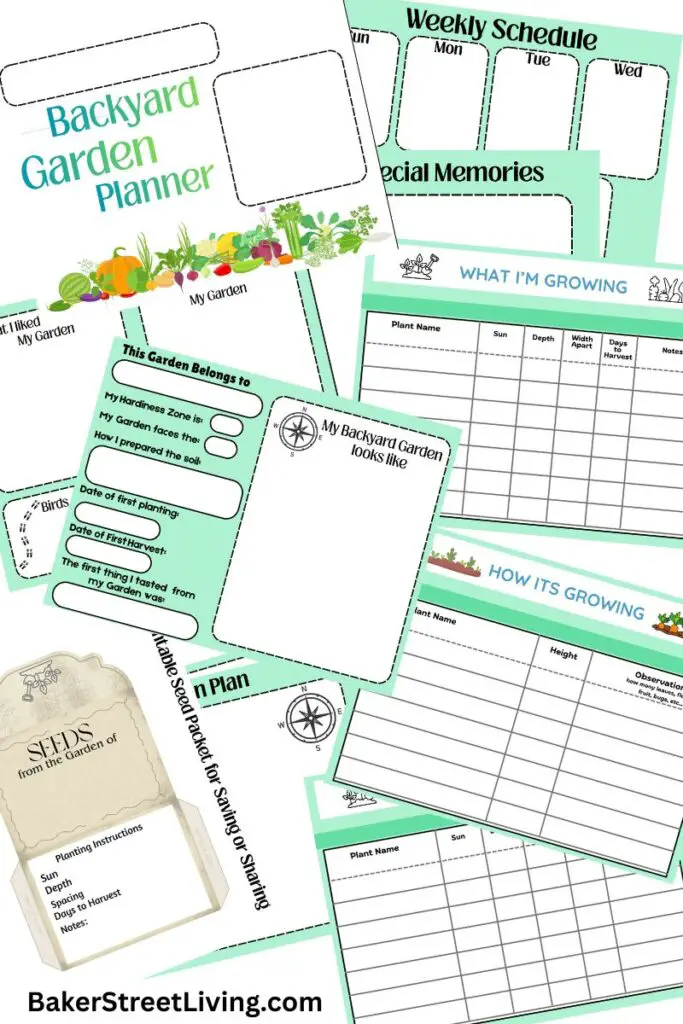
Download our Free Backyard Garden for Kids Planner
This planner is 12 pages, which includes:
- Customizable Cover page
- About My Garden Page
- Garden Planning Map Page
- What I’m Growing Pages
- Weekly Schedule
- How it’s Growing (Observation pages)
- Journal Pages
- Printable Seed Packet
- Notes and Special Memories Page
Building a Backyard Garden for Kids
Choose a Location
The success of a backyard vegetable garden, especially one designed for young gardeners, starts with finding the right spot. Here’s what to look for:
✔ Full Sun (6–8 Hours Daily)
Most vegetables need plenty of sunshine. Choose an area that gets consistent light throughout the day, especially from mid-morning to late afternoon.
Tip: Avoid spots shaded by tall fences, garages, or large trees.
✔ Level Ground
Flat areas are easier for kids to water, walk around, and maintain. If your yard slopes, raised beds can help create a level growing space. If you don’t have level ground, you can do a hillside garden or create container gardens.
✔ Good Drainage
Avoid low areas where rainwater pools. Vegetables prefer soil that stays moist but not soggy. If using containers, add a layer of small drainage gravel into the bottom and ensure the containers have drainage holes.
✔ Close to a Water Source
Kids are more likely to take ownership of their garden if watering is simple and accessible. A hose hookup or rain barrel nearby makes a big difference. If possible, use an easy-to-wind hose reel or a retractable lightweight style hose. Avoid heavy hoses that are hard for small hands to maneuver. The choice of hose and attachments will depend on the child’s age and ability. For very young children or children with physical challenges, making it as easy as possible will be a more satisfying adventure for them.
Get the Gear
This website contains affiliate links. As an Amazon affiliate, I earn a small commission from qualifying purchases (at no cost to you).
- Garden Tools for Kids
- Kid-Sized Wheelbarrel (great for mixing soil)
- Watering Can
- Easy Grip Garden Gloves
- SPF-rated Sun Hat
- Magnifying Bug Tool
- Blank Plant Markers
Plan the Layout
Helping a child plan a backyard garden is a great way to teach about soil, sun and shade.. Start by exploring what they want to grow—let them choose a few favourite vegetables, herbs, or flowers to make the garden feel truly theirs. Walk around the yard together and look for sunny spots, soft soil, and places that are easy for them to reach.
Draw a simple garden map with them so they can decide where each plant will go, using pictures or colours for fun. Talk about what each plant needs, such as sun, water, and space. Help them create a simple weekly plan for watering and checking on their plants. By guiding them through each step. You’ll help them feel excited, capable, and confident about growing their garden.
Using Containers or Raised Beds
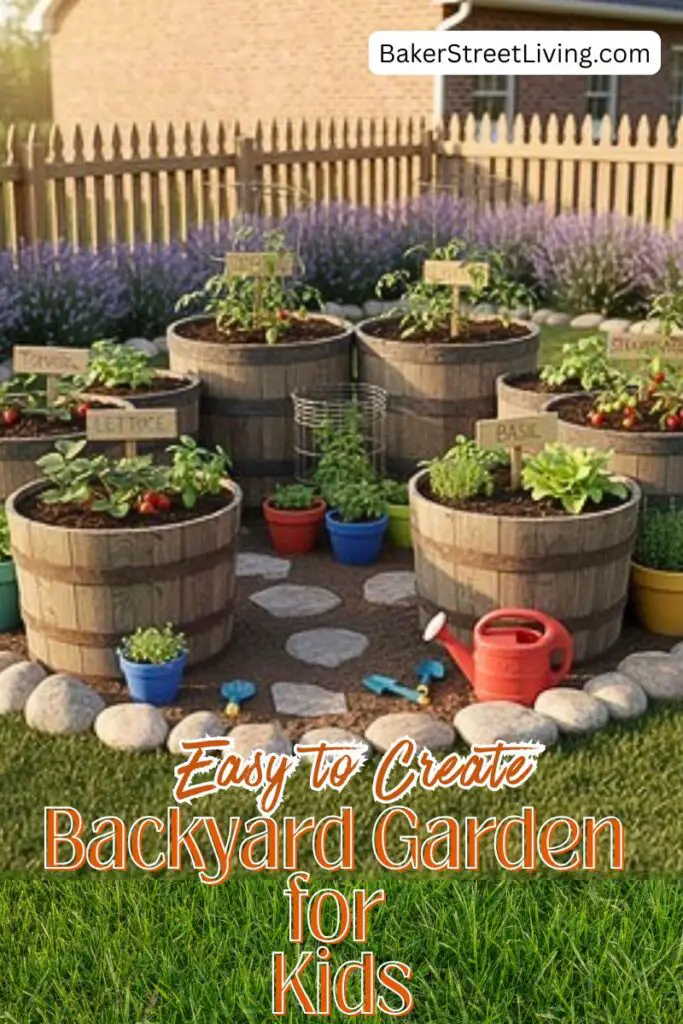
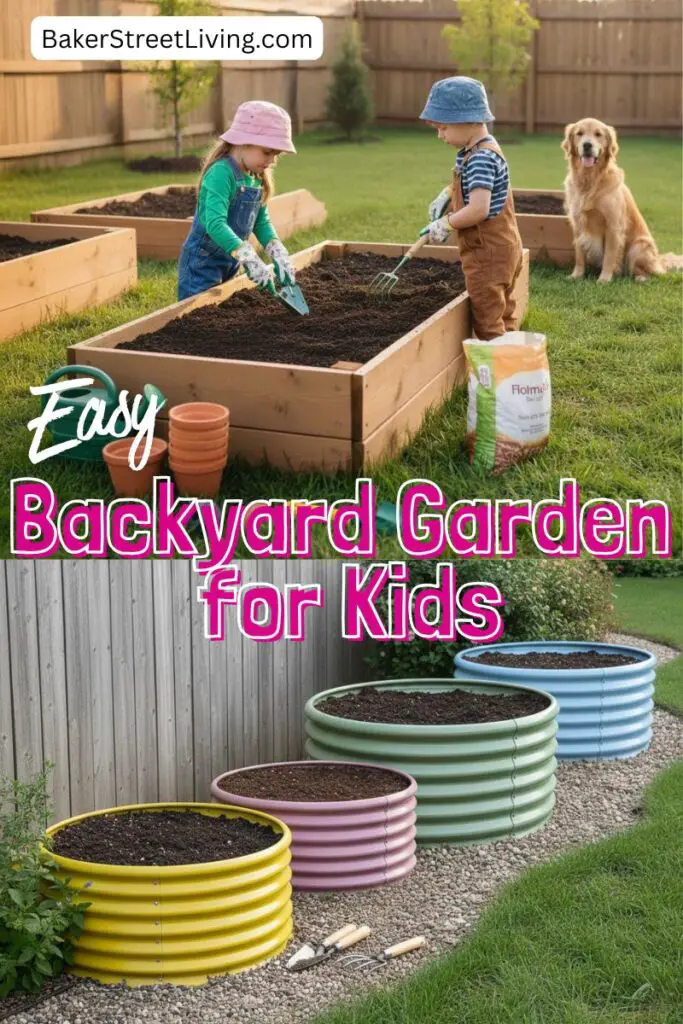
Using containers and raised beds when designing a backyard garden for kids is a great way to make gardening easier, more manageable, and a lot more fun. Raised beds give kids their own special space to plant, water, and explore without stepping on delicate plants, while also improving soil quality and drainage. Containers are perfect for small spaces or for growing herbs, cherry tomatoes, and flowers right on a patio or balcony. Both options keep weeds down and make it simpler for kids to reach, dig, and harvest. With colourful pots, kid-height beds, and plenty of room to experiment, these garden setups help children feel successful and excited as they watch their plants grow.
Some Good Container Options
- Galvanized Steep Coloured Round Gardens (with rubber edge to prevent injury)
- Ratan Raised Bed Boxes
- Portable Grow Bags
- Wheeled Planter
Soil Preparation
Good soil is the secret to a successful backyard garden for kids, and preparing it can be a fun learning activity. Start by showing kids how to loosen the soil with a small shovel or trowel. This helps air and water move through the dirt more easily, giving plant roots the space they need to grow strong.
Remove any rocks, sticks, or old roots you find along the way. Kids usually see this as treasure hunting! If your soil looks heavy, clay-like, or full of lumps, adding a few inches of fresh garden soil or compost will make it softer, richer, and easier for plants to thrive in.
Once the soil is loosened, let kids help mix in organic matter like compost, aged manure, peat moss or a store-bought soil blend labelled for vegetables. Explain that this is like feeding the soil so the plants have “food” all season long.
Kids can also learn about earthworms and how they help keep soil healthy by making tunnels and breaking down organic material. After mixing the soil, level the surface and lightly water it to help settle it before planting.
Best Plant Choices for Kids
Choose plants that grow quickly, are visually exciting, and taste great. When kids see fast results, they stay motivated! This is also a great opportunity to get them to eat vegetables they may not want to eat. Sometimes, if they have grown it themselves, they are more willing to eat it.
Easy, Fast-Growing Vegetables
- Cherry tomatoes – Sweet, colourful, and perfect for snacking
- Cucumbers – Grow quickly and love climbing, making them good for small or confined areas.
- Radishes – Ready to harvest in as little as 20–30 days
- Green beans – Fun to pick and great for teepee trellises
- Lettuce – Grows quickly, and kids can harvest little by little
- Peas – Sweet, crunchy, and fun for early spring planting
- Zucchini – Almost guaranteed success; very productive
Herbs are perfect for sensory learning. They smell wonderful, grow easily, and add flavour to meals kids helped make. Growing herbs is a great way to teach about drying and preserving for use throughout the year.
Best Herbs for Beginners
- Basil – Fragrant and perfect for summer. can grow large and with an abundant harvest.
- Mint – Easy and fun (but plant in a container so it doesn’t spread)
- Parsley – Hardy and forgiving
- Chives – Mild onion flavour and comes back every year
- Thyme – Low-maintenance and great for small hands to harvest
Many herbs make great companions for vegetables because they help repel pests, attract pollinators, or improve growth. Consider this list when planning the layout for your backyard garden for kids.
- Basil – Repels flies and mosquitoes; great near tomatoes and peppers.
- Mint – Keeps ants, aphids, and cabbage moths away (best grown in a pot so it doesn’t spread).
- Rosemary – Helps deter cabbage moths, carrot flies, and beetles; good near carrots and beans.
- Thyme – Repels whiteflies and cabbage worms; perfect near cabbage family plants.
- Oregano – Acts as a general pest deterrent and is easy to grow near almost any veggie.
- Sage – Helps keep carrot flies and cabbage moths away.
- Chives – Repel aphids and mites; great near tomatoes, carrots, and lettuce.
Flowers that Deter Pests
Some flowers that help repel bugs in a vegetable garden:
- Marigolds – Great for keeping pests like aphids and nematodes away.
- Nasturtiums – Repel squash bugs, aphids, and whiteflies.
- Calendula – Helps deter beetles and aphids.
- Lavender – Keeps moths, fleas, and some beetles away.
- Chrysanthemums – Naturally repel many insects, including ants and roaches.
Personalizing the Garden
Kids also love decorating the outside of the garden with:
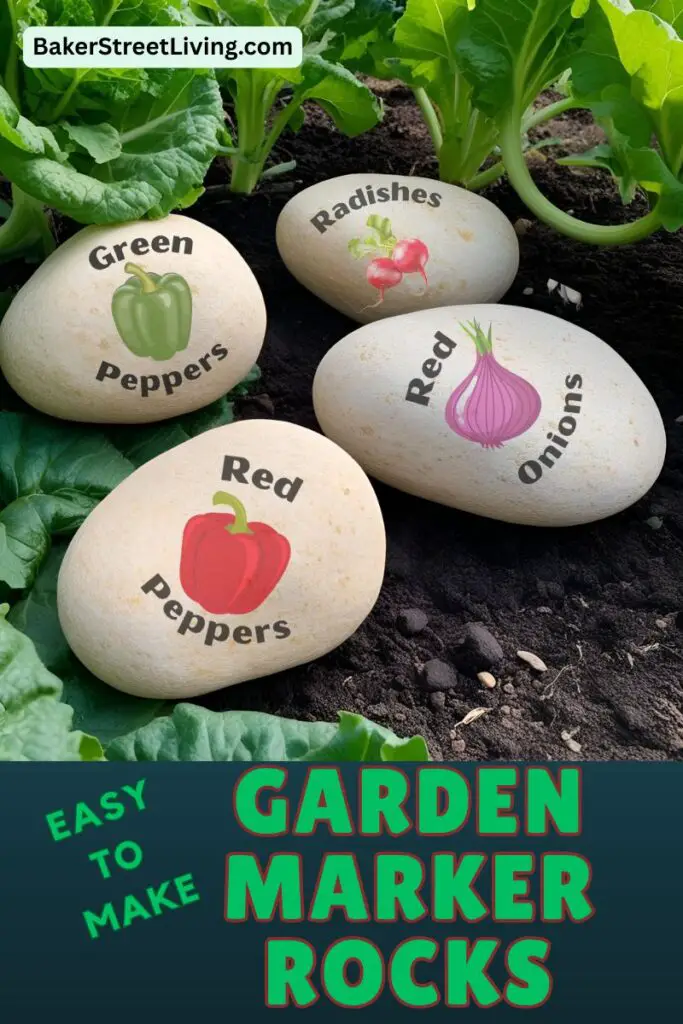
- Painted rocks
- Plant markers
- Little garden signs
- Fairy lights or solar stakes
- Fairy Garden Accents
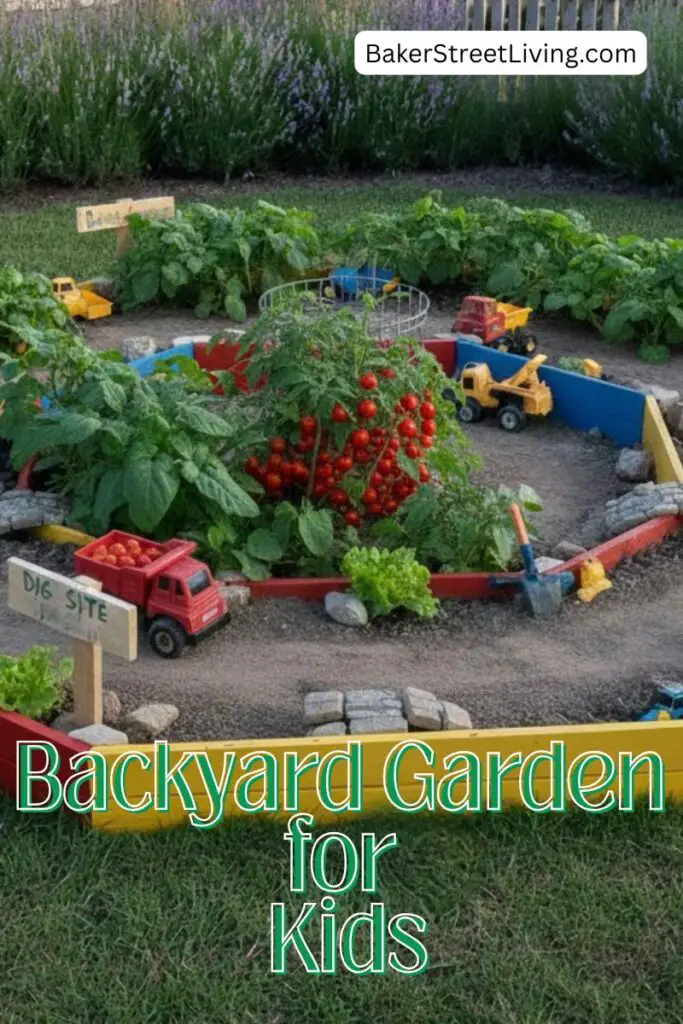
- Roads for trucks and toys to go around (check out our Tonka truckload of tomatoes below)
It becomes not just a garden, but a project they feel proud of and connected to.
Plant Care
Watering and Feeding
Caring for a Vegetable Garden is one of the best ways for kids to get a sense of responsibility, and it’s really not all that hard. Firstly, consistent watering is key. Veggie and herb gardens need about an inch of water a week, but on those hot summer days, they might need a bit more, so keep an eye on it.
Teach the kids how to check the soil with their fingers. If the top inch feels dry, then it’s time to get the watering can out. Morning is the best time to do it as the sun won’t evaporate the water off that quickly, and it helps deter plant diseases too. When it comes to actually watering the plants, teach the kids to water the base of the plant, not the leaves. D More of the water will get to the roots that way & that’s where it’s needed most. Sometimes water sitting on the leaves can cause disease or attract bugs.
Fertilizing is a simple enough step to help your plants grow big and healthy. To make it a breeze for little gardeners, give them a slow-release organic fertilizer at the beginning of the season and don’t forget to do the same again halfway through summer. They can handle it, and it’s probably easiest to apply. Herbs are a lot more laid back when it comes to fertilizer. They’re happy with just a light feed every now & then. With regular watering, a bit of fertilizer and some tending, little ones can actually see their garden start to grow & enjoy the brilliant sense of achievement that comes with growing their own veggies.
Pruning
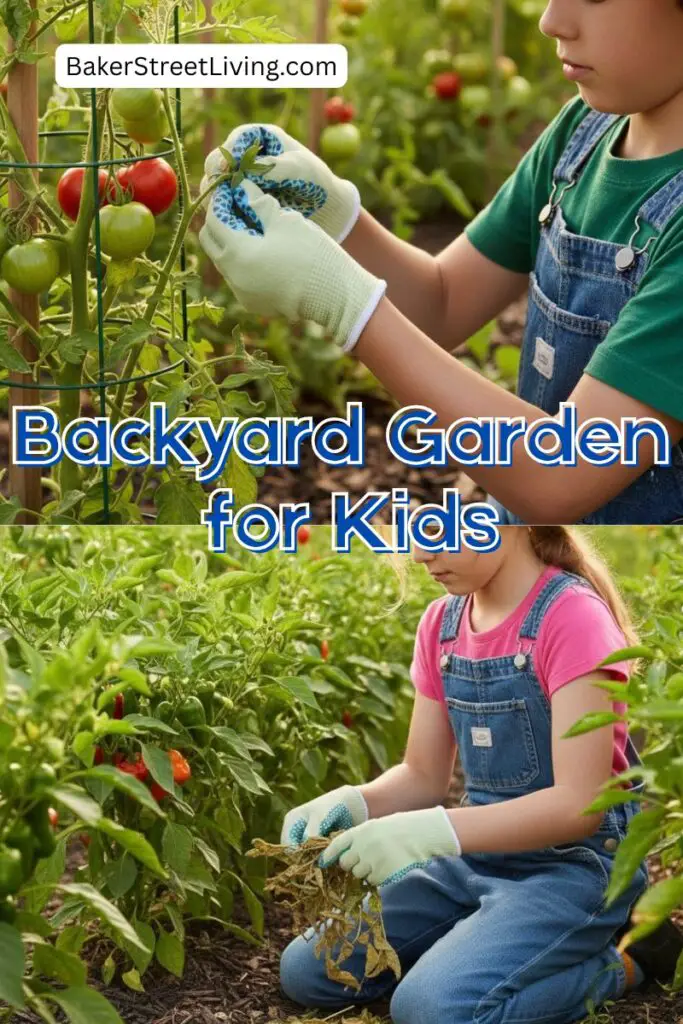
Tomatoes – Pruning tomato plants helps them grow stronger, healthier, and produce more food. Show kids how to remove the little shoots called “suckers” that grow in the V-shaped space between the main stem and a branch. These suckers take energy away from the plant, so gently pinching them off helps tomatoes grow bigger and ripen faster. Kids can also remove any yellow, dry, or damaged leaves near the bottom of the plant. This keeps the plant tidy and lets more air move around it, which helps prevent problems like mould or mildew.
Peppers grow best when kids remove a few of the lower leaves that touch the soil. This improves airflow and helps prevent pests. Kids can also pinch off early flowers so the plant grows stronger before producing peppers.
Check the seed packages or plant tag for care and pruning instructions. Not all vegetables need pruning, but removing dried leaves or diseased leaves can help the plant stay healthier longer.
Garden Maintenance
Mulching
You can make garden care a proper science experiment for them, too. show ’em how compost works – chucking in kitchen scraps like fruit peels, eggshells and veggie trimmings makes a fantastic natural plant food. Be mindful that some scraps can attract bugs.
Checking for Disease and Bugs
Not all kids will want to do this, but they can all watch and learn. Check on the underside of leaves for bugs. You can often see little webs of tiny mites crawling.
Harvesting
Harvesting vegetables and herbs in a backyard garden is one of the most exciting parts for kids—it’s when all their hard work pays off! This is the time to teach them how to tell when vegetables are ripe and ready for harvest. Kids love learning that picking vegetables often helps the plant grow even more. Plus, bringing fresh produce into the kitchen makes them feel proud and connected to the food they eat. It’s a hands-on way to learn responsibility, patience, and where real food comes from!
Saving and Sharing Seeds
Saving and sharing seeds is a fun way for kids to keep their garden growing year after year! After your vegetables or flowers finish growing, you can collect their seeds, let them dry, and store them in small envelopes or jars. Kids love labelling their seed packets with drawings or plant names, and it helps them remember what they grew. Sharing seeds with friends, classmates, or neighbours is like swapping tiny surprises; everyone gets to try new plants and learn together. It’s a great way to save money and build a gardening community right in your backyard!
The Printable Seed packet
In our Guide for a Backyard Garden for kids, we provide a printable seed packet that the children can fill out and add their own personal touches. It is best to have the children fill out the envelope before assembling or adding seeds.
To assemble the seed packet, just cut around the edges. Fold in the side flaps and use double-sided tape or glue to create the envelope. If you opt for glue, allow it to fully dry before you add any seeds. Fold down the top flap. Fill with seeds and use double-sided tape or glue to secure the flap in place.


I hope you enjoy creating your own backyard garden for kids. It can be a very rewarding summer-long project that teaches responsibility, nature, and problem-solving in a way that gets tangible results.

This website contains affiliate links. As an Amazon affiliate, I earn a small commission from qualifying purchases (at no cost to you).